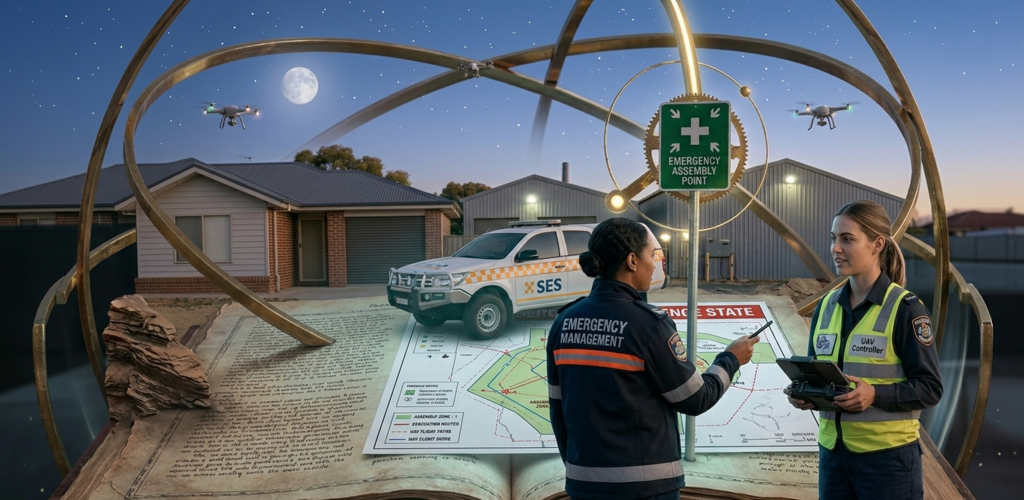
During emergencies such as fires, gas leaks, electrical faults, or building evacuations, people need a safe place to gather after leaving the building. This designated location is known as an emergency assembly area. Emergency assembly areas are an important part of workplace safety, evacuation procedures, and emergency response planning.
A clearly identified emergency assembly area helps ensure employees, visitors, contractors, and occupants can gather safely away from danger while emergency wardens and emergency services confirm everyone has evacuated successfully.
Emergency assembly areas are commonly included in evacuation plans and evacuation diagrams across offices, warehouses, schools, apartment buildings, and commercial facilities throughout Australia.
An emergency assembly area is a designated safe location where building occupants gather after evacuating during an emergency. It is positioned away from hazards such as fire, smoke, falling debris, vehicle access points, or emergency response operations.
Emergency assembly areas help organisations:
Assembly areas are a key component of emergency evacuation procedures and are commonly required under Australian emergency planning standards such as AS 3745-2010.
During emergencies, people may evacuate quickly and become separated or confused. Without a designated gathering point, emergency wardens may struggle to confirm whether everyone has exited the building safely.
Emergency assembly areas are important because they:
A properly planned assembly area helps businesses and organisations manage emergencies more effectively while improving occupant safety.
An emergency assembly area should be located at a safe distance from the building and positioned where occupants are protected from ongoing hazards.
A suitable emergency assembly area should:
Common emergency assembly area locations include:
The assembly point location should always be clearly identified within evacuation diagrams and emergency response plans.
Professional evacuation diagrams play an important role in helping occupants locate emergency assembly areas during emergencies. Evacuation diagrams should clearly display:
Clearly marked assembly areas improve evacuation efficiency and reduce confusion during emergency situations.
Different workplaces and facilities may require different assembly area arrangements depending on occupancy levels, operational hazards, and building layouts.
Office buildings typically use outdoor meeting points or nearby open spaces where employees and visitors can safely gather.
Warehouse assembly areas should be positioned away from loading docks, machinery operations, hazardous materials, and vehicle traffic.
School emergency assembly areas must provide enough space for students, teachers, and staff while supporting organised evacuation procedures.
Residential buildings often designate assembly points outside the building complex where residents can gather safely during emergencies.
Emergency wardens are responsible for helping manage evacuations and ensuring occupants move safely to the assembly area. Once occupants gather at the emergency assembly point, wardens may:
Well-organised assembly areas improve emergency coordination and help emergency personnel respond more effectively.
Emergency assembly areas should be reviewed regularly to ensure they remain suitable and accessible. Changes to building layouts, nearby construction, traffic conditions, or operational hazards may affect assembly point safety.
Assembly areas may need updating if:
Keeping assembly points updated improves emergency preparedness and workplace safety.
Having a clearly designated emergency assembly area provides several important safety benefits, including:
Prepared workplaces are better equipped to respond safely during emergencies.
An emergency assembly area is a critical part of every emergency evacuation plan. It provides a safe location where occupants can gather after evacuating a building while emergency wardens and emergency services coordinate the emergency response.
By clearly identifying emergency assembly areas within evacuation diagrams and emergency response procedures, businesses and property managers can improve workplace safety, emergency preparedness, and evacuation efficiency.
Whether for offices, warehouses, schools, or residential buildings, properly planned emergency assembly areas help protect occupants and support safer emergency management during critical situations.
